
Where we are today
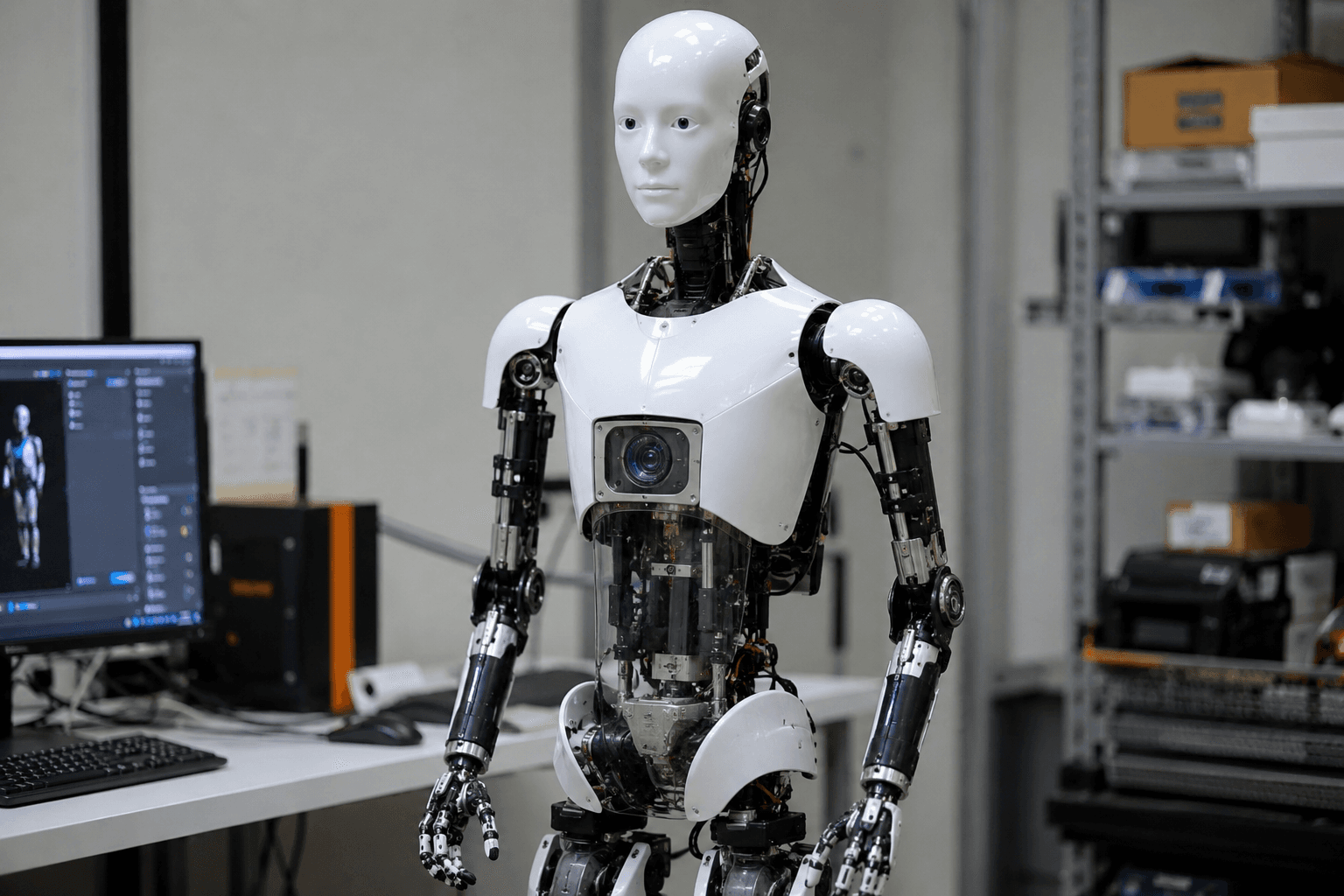
In 2026, no humanoid robot is shipping into homes at scale. The two closest things are entry-level Unitree platforms aimed at developers, and announced consumer roadmaps from Tesla and 1X. Both are either research-grade or still vapour-pricing. The leading deployments are all enterprise: factories, warehouses, R&D labs.
The hardware roadblocks
Walking on a flat factory floor is solved. Walking up your kid's Lego on a soft rug while carrying a glass of water is not. Battery runtime is 1–6 hours per charge depending on workload: fine for industry, painful for homes. And the safety bar is much higher when the robot is sharing space with toddlers and pets. None of these are unsolvable, but they don't dissolve in 12 months.
The software roadblocks
Long-tail novelty is the deeper problem. Robots in 2026 run learned policies that work great on tasks they have lots of data for, and break on tasks they don't. A factory has a controlled task distribution. A house has an uncontrolled, unique-per-house task distribution. Closing that gap requires either much better data efficiency from foundation models, or a way to collect home-specific data without violating people's privacy. Both are open research problems.
Realistic timelines
Our take: useful early-adopter consumer humanoids (limited tasks, supervised, expensive but real) toward 2028–2030. Mainstream consumer adoption that resembles a smartphone rollout is closer to 2032–2035. The biggest accelerator would be a non-humanoid form factor for home use (wheels and a single arm) that hits the kitchen and laundry use cases sooner. Watch that space too.