
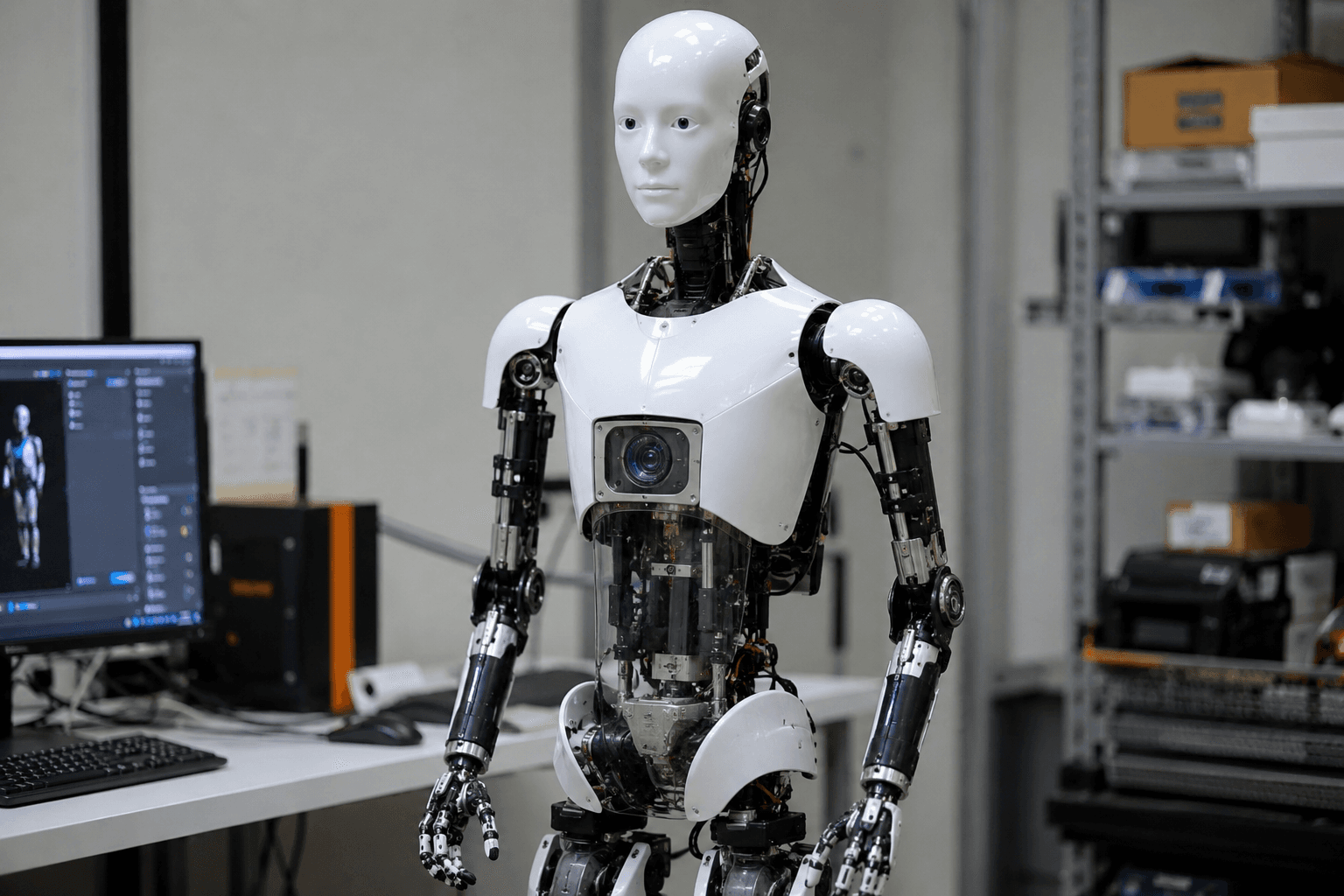
What makes a robot "humanoid"
The defining feature is body shape, not intelligence. A humanoid robot has a vertical torso, two arms with hands, two legs that walk bipedally and a head with sensors near the eyes. That form factor matters because the world we built was designed for human bodies: door handles, stairs, factory tools, kitchen sinks. A humanoid robot can drop into that world without redesigning it.
How they differ from other robots
Industrial robot arms in factories are bolted to the floor and trained to do one task very precisely. Wheeled robots in warehouses move pallets along clean, flat floors. Quadrupeds like Spot are great at rough terrain. Humanoids are general-purpose: same body, many tasks, no task-specific tooling. That is also their hardest engineering challenge.
What they can (and can't) do in 2026
In 2026, the leading platforms (Atlas, Optimus, Figure 02, Digit, the Unitree humanoids) can walk reliably, climb stairs, pick up and place objects up to ~20 kg, and follow scripted task sequences. Most of them can do this for one to a few hours per battery charge. They struggle with long-tail novelty: a tool they have not seen before, an unexpected obstacle, or a task that requires fine dexterity like tying a knot.
In 2026, deployments are nearly all enterprise pilots: automotive plants, warehouses, logistics centres. Contracts are multi-year service deals. Consumer-priced humanoids exist as concepts and roadmaps, not products you can order in 2026.
The next 5 years
Two trends are colliding: hardware is getting cheaper (Unitree alone has dropped humanoid pricing by an order of magnitude), and AI models are getting better at translating natural language into robot actions. The interesting question is not when a humanoid will fold your laundry. It's which industries will adopt them first, and what the second-order effects will be on labour markets, urban design and home life.